Too often in typical team building exercises, people take their usual roles with them. We use real play – and our Sharky+George cards – to mix things up and uncover a more interesting version of the team…
A lot of standard team-building exercises have two problems: they make everyone cringe with embarrassment (as with ice-breakers); and each person continues in more or less the same roles and modes as they do at work.
For example, if you get a bunch of co-workers to build a raft, the chances are the office hierarchy will reappear, with senior people assuming command and the others falling into supporting roles. Soon the group is behaving pretty much as it does on a normal working day, just with barrels and rope.
But this wastes one of the great opportunities of getting a team away from ordinary work in the first place, which is the chance for people to bring hidden qualities into the light and see one another differently.
Real play reshuffles the pack
This is one reason Sharky + George events are built around real play, as opposed to typical corporate exercises which merely look playful.
We create situations and spaces that really are absorbing and unfamiliar, fun and unpredictable. In real play, job titles soon become irrelevant, and qualities that are normally downplayed in the workplace can come to the fore.
By the end of one of our events, the buzz of conversation is usually along the lines of: “I can’t believe X was so good at that”, and “who knew Y had that in them?”
Real play creates enough freedom for the group to discover that usefulness comes in many forms, and that people have much more to offer than is always obvious in their work roles. Or to put it another way: the pack gets reshuffled.
And we bring an actual pack…
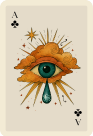
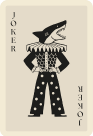
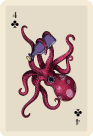
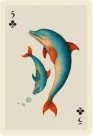
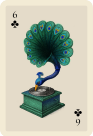
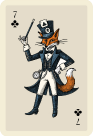
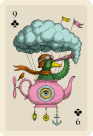
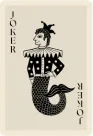
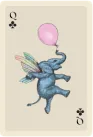
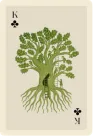
This is where our Winning Hand cards come in.
They’re a set of playful archetypes representing different qualities people can bring to a group. Clients tend to love them because they are immediate, tactile and fun to talk about, but there is also a serious idea behind them.
The cards are non-hierarchical, so there is no “best” archetype and no suggestion that one kind of person matters more than another. They pick out characteristics that can be valuable in different circumstances, and qualities that might belong to the CEO, the intern or anybody in between.
Before, during or after an event, the cards give people a simple way of thinking about themselves and one another. They might ask things like: Who did we expect to take the lead… and who actually did? Who brought the brilliant idea nobody else had considered? Who held the group together when things started going wrong?
Or, using the cards: who was the Strategist, who was a Champion, a Connector or a Disruptor?
The cards are a lovely way to visualise and understand what the play has just revealed.